
Tibor Massányi: Quality today is measurable in the processes themselves
DVM’s managing partner reflects on how architecture and construction have evolved, what has stayed constant at the firm, and which questions are shaping the future of the field.
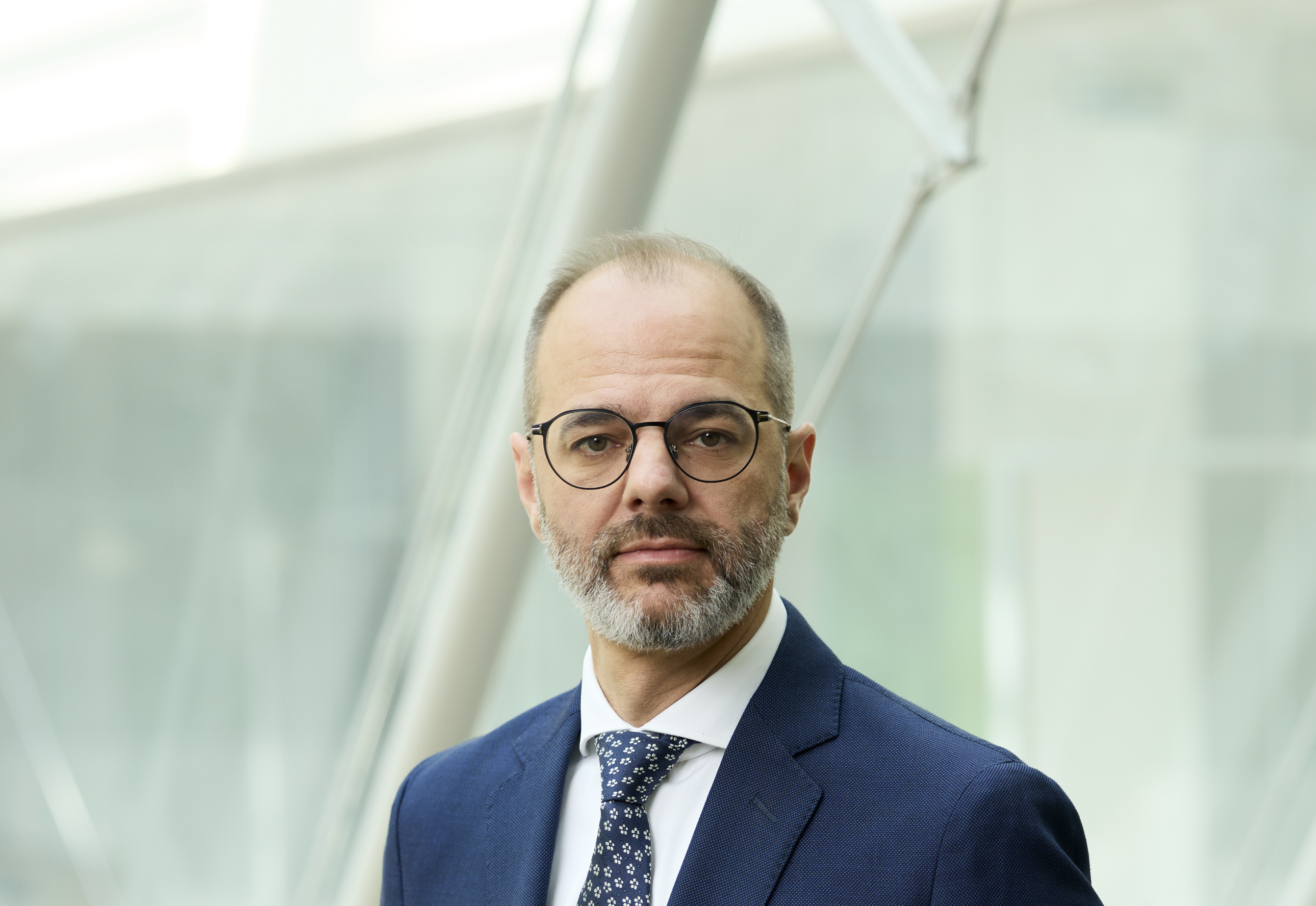
DVM’s story is also a record of the change the worlds of architecture and construction have gone through in recent decades. Where the field once operated along more clearly separated roles and more linear processes, today it calls for far more complex thinking. A building has to be considered simultaneously through technological, sustainability, operational, financial and user-experience lenses — while the very notion of quality has broadened. We sat down with Tibor Massányi to talk about how that mindset has shifted, what has stayed constant at DVM, and which questions are shaping the future of architecture today.
DVM has come a long way. Looking back, what do you see as the biggest difference compared to the early days?
The biggest difference is probably that we now have to think within a much more complex system than we did at the start. Processes used to be more linear, roles more clearly separated, and there were often more visible boundaries between design, construction and operation. Today these areas are much more tightly connected, and a project can only really be carried through well if we’re able to address technological, sustainability, financial, operational and user-experience considerations all at once.
We’ve always been close to the view that architecture should also be looked at from the construction side, but in recent years this has become even more pronounced. Today integrated practice carries more value than it used to, because quality isn’t something measured only in the finished space. In the past, that idea was perhaps more tied to the architectural end result. Today it’s a broader concept: it also includes the transparency of the process, the precision of decisions, technical consistency and how well a building actually functions over the long term. DVM has been built up gradually around this more complex, more integrated way of working, and I think that’s where one of our most important values lies today.
What, in spite of all that change, has stayed constant in the way DVM works?
One such constant, I think, is the discipline of engineering thinking. It has always been important to us that a project be architecturally strong while also remaining precise in its internal logic, its organisation and its buildability. That kind of precision has been present throughout, and it still fundamentally shapes how we think about our work.
Another equally important constant is the partnership we build with clients. Lasting professional value emerges where there’s a real dialogue between the participants in a project. That requires trust, transparency and a lot of patience. We have always aimed to be a thinking partner in those processes.
The third element is a sensitivity to detail. Whether it’s a smaller-scale interior project or a complex, large-scale one, quality often comes down to how well the details add up to a coherent whole. The relationship between detail and whole is the same question at every scale, and it has always been an essential consideration for us. Those internal constants are probably what have allowed us to deliver consistent quality even as the environment around us has changed.
Sustainability today carries both a serious professional realisation and a strong institutional and market pressure. Where do you see the point at which sustainability stops being a communication or compliance issue and becomes a consideration that actually defines the quality of a project?
Sustainability is unavoidable today, but for me it only becomes genuinely credible when it isn’t applied as a separate layer on top of a project, but is part of the thinking from the start. For a building, this is a much deeper question than which technologies or certification systems get attached to it. It’s present in durability, in material choices, in operability, in adaptability and in how meaningfully the building can keep working over the long term.
Alongside that, of course, there is a strong compliance side too — regulatory, market and client expectations all push in the same direction. There’s nothing inherently wrong with that, because many important changes are actually accelerated by it. The real question is whether sustainability stays in an administrative category, or whether it really becomes embedded in the deeper layers of professional decisions. We work for the latter. For us, sustainability is only truly meaningful when it’s tied to sound engineering thinking, long-term usability and the responsibility that comes with a building’s entire life cycle.
The discourse around artificial intelligence is also intensifying in architecture. Do you see these new tools as reshaping the profession’s methods, or architectural thinking itself?
Design, coordination, preparation and construction now genuinely operate in much more interconnected, data-intensive systems than before. That has certainly brought a major change at the methodological level: it allows greater precision, faster feedback and more transparent collaboration.
AI represents yet another layer on top of that. In one sense it really does reshape the profession’s methods, because it can speed up analysis, preparation or optimisation work, and give us new tools for managing information. At the same time, I believe it will, over the longer term, also affect architectural thinking — because every technology that changes the rhythm of design, the relationship to information and the structure of decision-making eventually shapes how we think.
Even so, the essence of architecture is still shaped by human qualities. A sense of proportion, spatial intelligence, cultural sensitivity, and the ability to bring many viewpoints into a single coherent answer still require personal knowledge and responsibility.
Architecture is clearly evolving under more and more complex technological, environmental and use-related demands. Where is that headed in the coming years, and how is DVM preparing for it?
Architecture will become even more complex in the coming years. The pressure is growing for a building to deliver a precise technical answer, be more sustainable, adapt to changing use, and still represent value in spatial and cultural terms — all at once. So the various expectations aren’t shrinking, they’re intensifying, and that forces designers and builders to think with even greater discipline.
At the same time, adaptability is likely to become more valuable. The buildings — and the professional models — that will stand the test of time are those that don’t respond only to a single moment’s requirements but can keep working flexibly over the long term. DVM, too, has to keep developing in that direction: treating these not as separate considerations but as parts of one connected professional way of thinking. In the end, the most important value has always been the team — that shared professional culture in which disciplined thinking, sensitivity to quality and openness to the new are all present at once.